Rankadmain
SEO title (≤60 chars): GEO for CPG Brands: Get Named in AI Answers (2026) Meta description (≤155 chars): Shoppers now ask ChatGPT and Perplexity what to buy. Here’s the GEO for CPG brands playbook to get your product named, step by step. Slug: /geo-for-cpg-brands/ Primary keyword: geo for cpg brands Secondary keywords: generative engine optimization for CPG, AI search for consumer packaged goods, CPG AI visibility, AEO for CPG, AI shopping assistants
Last updated: October 2026
A shopper types, “best protein bar without seed oils,” into ChatGPT. The answer names three brands. The other two hundred in the category? Invisible.
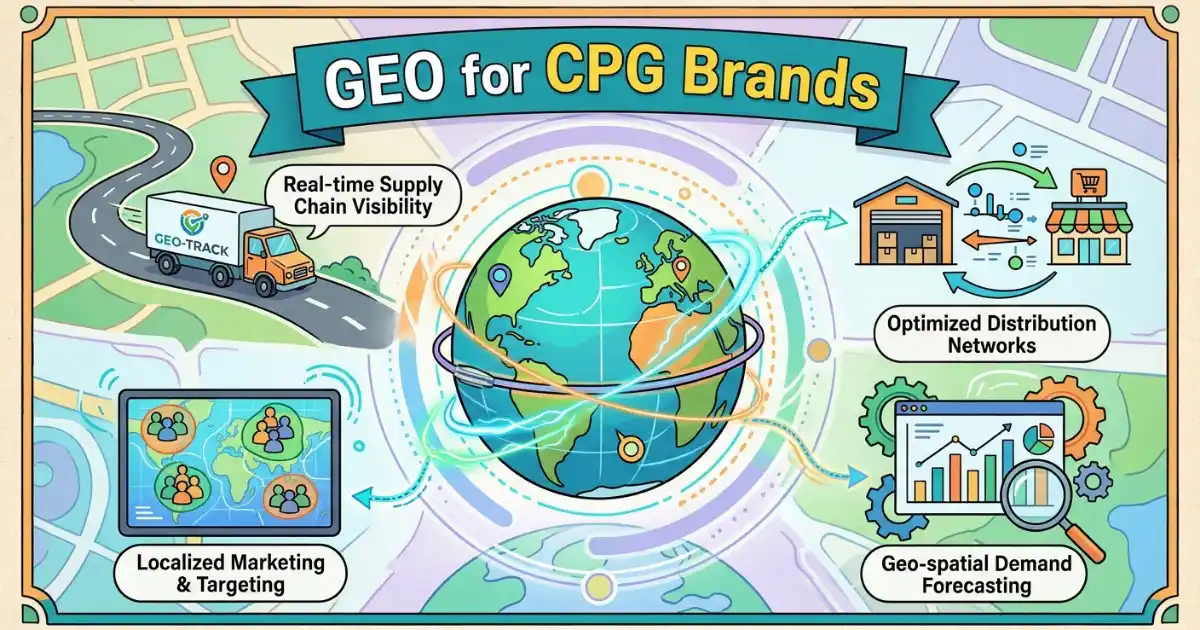
That is the problem GEO for CPG brands is built to solve. Generative Engine Optimization (GEO) is the practice of making your brand easy for AI systems like ChatGPT, Perplexity, Gemini, and Google AI Overviews to find, trust, and name inside their answers. For a consumer packaged goods company, it is the difference between sitting on the “digital shelf” and not being on the shelf at all.
If your impressions are rising but clicks are flat, this shift is probably part of the reason. People get the answer first and click later, or never. So the goal is no longer only “rank on page one.” It is “be the brand the answer names.”
Quick answer: what is GEO for CPG brands?
GEO for CPG brands means structuring your product data, content, and third-party mentions so AI engines can retrieve and cite your brand when shoppers ask what to buy. It works through four levers: clean product facts, answer-style content, independent mentions (reviews, roundups, press), and ongoing measurement. It sits on top of SEO. It does not replace it.
Why CPG feels this shift first
Most categories have a few dozen serious options. CPG has hundreds, sometimes thousands, and the products are cheap enough that shoppers decide fast. They want a shortlist, not ten blue links.
AI assistants are happy to give them one. Agency Barrel notes that in these generated answers, only a handful of brands, often three to five, make the cut. That is a very different game from page-one SEO, where ten spots are up for grabs.
The scale is real too. SerpApi reports that Google’s AI Overviews passed 2.5 billion monthly users by mid-2026, and retailers are building their own assistants. FoodNavigator covered how shopping assistants like Walmart’s Sparky and Amazon’s Alexa for Shopping are reshaping how consumers find food and beverage products. So you have to think about both the public AI engines and the retailer ones.
GEO vs. SEO vs. AEO: the short version
People mix these up constantly, so here is the plain version.
- SEO gets your pages ranked in classic search results.
- AEO (Answer Engine Optimization) formats your content so it can be lifted as a direct answer.
- GEO earns your brand a mention or citation inside AI-written responses.
They overlap a lot. If you want the full breakdown, read our guide on AEO vs. GEO vs. SEO, or the deeper comparison of SEO vs. GEO and why your website needs both. New to answer engines? Start with what Answer Engine Optimization (AEO) is.
One reassuring note from Google itself: its documentation says no special optimization is required for AI Overviews and AI Mode, and that normal SEO fundamentals still matter. A page also needs to be indexed and eligible to show a snippet to appear as a supporting link. So do not abandon SEO. Build GEO on top of it.
Does GEO actually work? What the research says
It is fair to be skeptical of any new acronym. The best evidence so far comes from the academic paper that named the field. Researchers from Princeton, IIT Delhi, and other institutions found that GEO methods can boost visibility in generative engine responses by up to 40%. The tactics that helped most were practical ones: adding credible statistics, quotes, and cited sources to content.
That fits what we see in practice. AI engines prefer content that is specific, sourced, and easy to quote. Vague brand copy loses.
A caution, though. Results vary by engine and by category, and no one outside these companies knows exactly how their systems pick sources. Treat GEO as a set of good bets, not a guarantee.
The CPG GEO playbook: 7 moves that matter
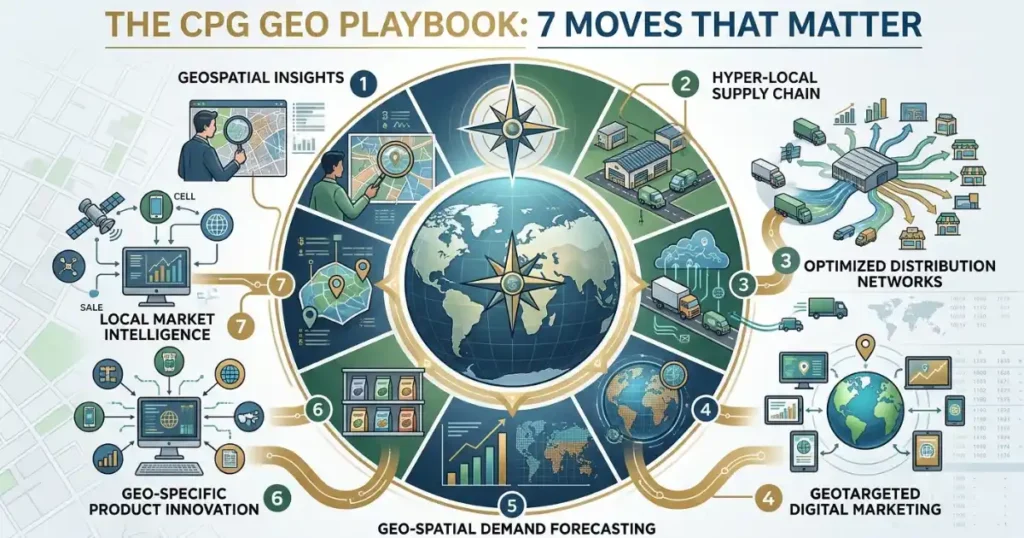
1. Fix your product facts first.
This is the unglamorous foundation, and most brands skip it. AI systems and retail assistants lean heavily on structured product data: ingredients, size, certifications, price, availability, and dietary tags.
Perplexity’s own head of shopping and advertising has said that when its systems can take in clean, well-organized product information with rich attributes and consistent taxonomy, results improve. Translation: if your data is messy, you are harder to recommend.
Practical checklist:
- Keep ingredient lists, claims, and sizes identical across your site, Amazon, Walmart, and other retailers.
- Move key specs out of PDFs and into plain HTML. A spec sheet buried in a PDF is nearly invisible to retrieval systems.
- Use consistent product names and variants everywhere.
2. Add product schema and real identifiers.
Structured data helps machines read your pages without guessing. Use schema. org Product markup with fields like brand, GTIN, offers, and reviews where they apply.
Your GTIN (the number behind your barcode) is the cleanest way to say “this exact product.” If you want to go further, the GS1 Digital Link standard lets you turn barcodes into web links that carry product information. It is early, but it is where product identity is heading.
Honest note: Google says no special structured data is required for AI features. Schema will not magically get you cited. It reduces ambiguity, and that helps everywhere.
3. Write the way shoppers ask.
Nobody types “organic baby food brand” into ChatGPT. They type, “What’s the best organic baby food for a 6-month-old with a sensitive stomach?”
Build pages that answer those full questions:
- A short, direct answer in the first two sentences.
- Then the detail: who it is for, what is in it, how it compares, and what it costs.
- Real FAQs, written from actual customer emails and reviews, not invented ones.
Our guide on how to create AEO content walks through the formatting in detail, and it applies directly to product and category pages.
4. Earn mentions you do not control
This is the big one for CPG. AI engines lean on independent sources: reviews, “best of” roundups, expert articles, and retailer listings. Your own site matters, but being named elsewhere is what makes an engine confident about you.
Everything PR’s CPG GEO analysis argues that inclusion in “best of” roundups is probably the highest-leverage move available. I agree with the direction, though it is one agency’s view, so test it in your own category.
What to do:
- Pitch product samples and data to the writers who publish category roundups.
- Build relationships with dietitians, chefs, dermatologists, or other real experts in your space.
- Publish original data, like survey results or ingredient sourcing details, that others will want to cite.
- Keep your retailer reviews healthy. Review text feeds and recommendations.
5. Publish content that earns citations.
Recipes, usage guides, and comparisons are great for food and beverage. Ungated recipe content with clear markup gets reused on cooking and meal-planning questions, according to Everything PR’s CPG playbook.
For household and personal care, think of “how to” and “what to look for” guides. Explain what a claim like “clean” or “high-protein” means in your category and show your numbers. Brands that define terms credibly are easier to cite than brands that just use them.
6. Make your site easy to crawl and read.
Basics still win here:
- Fast, mobile-friendly pages.
- Clean heading structure with one H1 and logical H2s.
- Internal links between your product, category, and guide pages.
- No important content hidden behind scripts, pop-ups, or logins.
Not sure where you are being cited today? Learn how to get cited by ChatGPT and Perplexity for the citation-side tactics.
7. Watch for wrong information.
AI engines sometimes repeat outdated ingredients, old pack sizes, or claims you no longer make. Barrel points out that inaccurate information in an AI answer can cost you the customer before they reach your site.
Run a monthly check. Ask the major assistants the questions your customers ask, and note what they say about you, what they say about competitors, and which sources they cite. Fix the source, whether that is your own page or a third-party listing. If you work in supplements or health claims, have compliance review what you publish, since regulators apply the same standards to AI-visible content as to any other.
How to measure GEO for CPG brands
Rankings do not tell the full story here. Track these instead:
| What to track | Why it matters |
|---|---|
| Mention rate | How often your brand appears across a fixed set of 30 to 50 buyer prompts |
| Citation sources | Which sites do AI engines pull from when they mention you? |
| Accuracy | Whether ingredients, sizes, and claims are stated correctly |
| Share vs. competitors | Your mentions compared with your top three rivals |
| Branded search and direct traffic | A lift here often follows AI visibility. |
| AI referral traffic | Visits from ChatGPT, Perplexity, and AI Overviews in analytics |
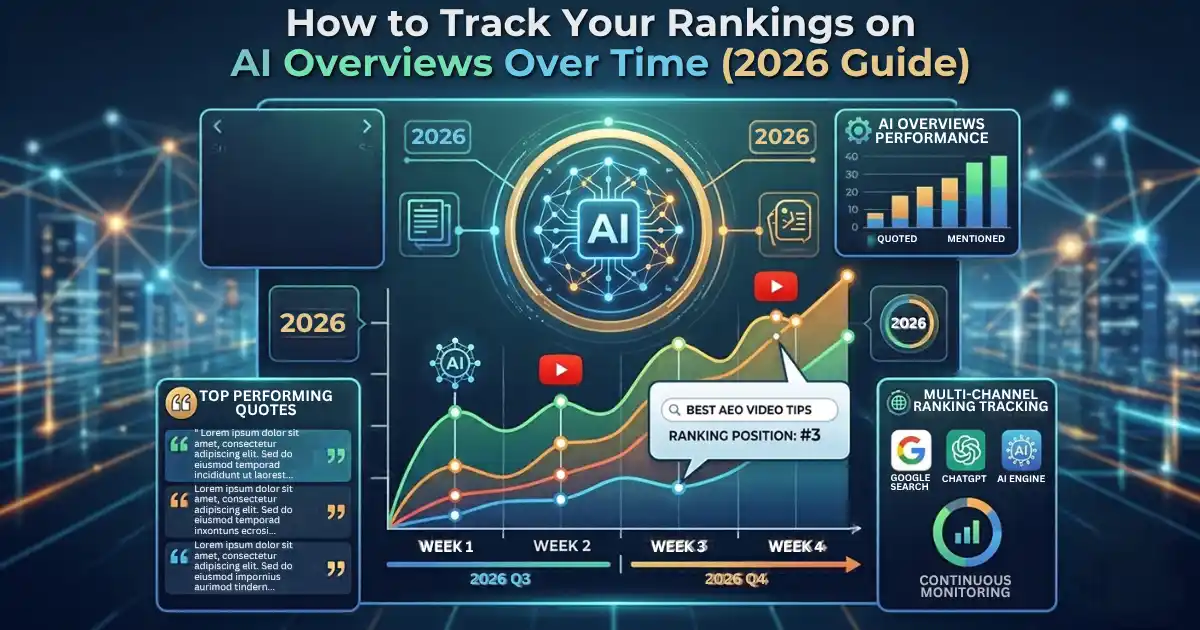
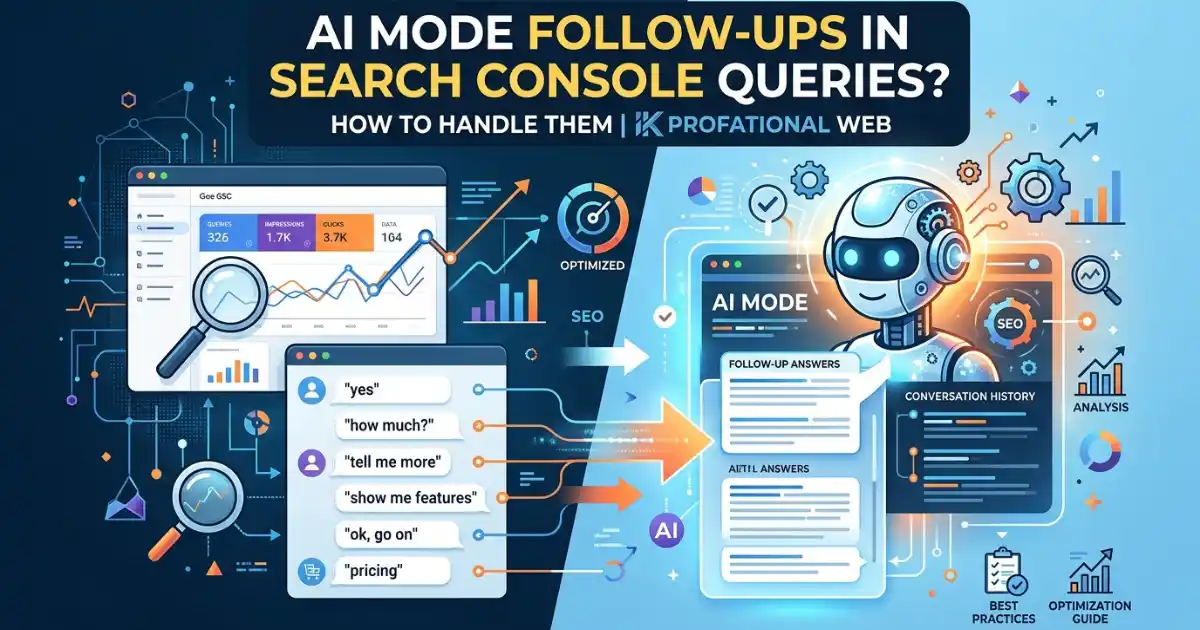
For Google specifically, read our walkthroughs on tracking AI Overviews in Search Console and tracking your AI Overviews rankings over time.
Also be honest about attribution. Much AI influence is invisible: someone sees your brand in an answer, then buys it at a store a week later. Expect to judge GEO partly by direction, not exact revenue numbers.
Where to spend your budget
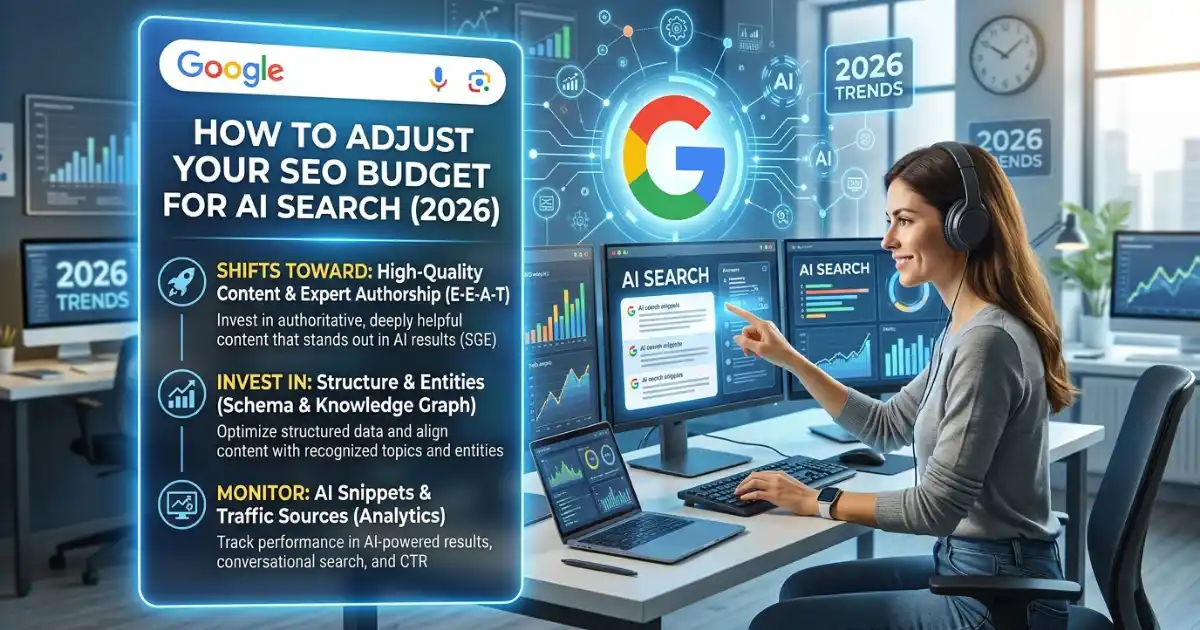
You do not need a giant new budget. Most brands can start by moving a slice of existing SEO and content spend toward product data cleanup, roundup outreach, and answer-style content. We cover how to rebalance and how to adjust your SEO budget for AI search.
A sensible order for a small team:
- Audit product data across your site and top two retailers.
- Rewrite your top 10 product and category pages in question-and-answer form.
- Add Product schema.
- Pitch five roundup writers each month.
- Start the monthly AI answer check.
Common mistakes to avoid
- Keyword stuffing. It is a weak tactic in AI answers, and the research points toward credibility signals instead.
- Gating great content. If it sits behind a form, engines cannot read it.
- Ignoring retailers. For many CPG brands, the Amazon or Walmart listing is the page AI reads.
- Making claims you cannot back up. Engines favor sourced facts. Regulators do too.
- Treating GEO as a one-time project. Category news, new products and retail resets all change what gets recommended.
FAQ: GEO for CPG brands
What is GEO for CPG brands?
It is the practice of optimizing your product data, content and brand mentions so AI engines like ChatGPT, Perplexity and Google AI Overviews name your products in their answers to shopper questions.
Is GEO different from SEO for CPG?
Yes, but they overlap. SEO focuses on ranking pages in search results. GEO focuses on being cited or recommended inside AI-written answers. Strong SEO fundamentals, such as crawlable pages and quality content, still support GEO.
How long does GEO take to show results?
It depends on your category and starting point. Fixing product data and publishing better pages can show up in AI answers within weeks in some cases, while earning third-party mentions usually takes months. Track a fixed prompt set so you can see movement.
Do small CPG brands have a chance?
Yes. Because AI answers name only a few brands, a niche brand with accurate data, credible expert mentions and clear answers can beat a bigger name that has neglected these basics.
Do I need special tools?
Not to begin. A spreadsheet of buyer prompts and a monthly manual check is enough. Dedicated AI visibility platforms can help once you need to track many products or markets at scale.
Does schema markup guarantee AI citations?
No. Google states no special structured data is needed for its AI features. Schema helps machines understand your product, but content quality and independent mentions do the heavy lifting.
The bottom line
The shelf moved. For a growing number of shoppers, it now lives inside a chat window, and it holds three or four brands, not forty.
You do not have to rebuild your marketing to compete there. Clean up your product facts, answer questions the way shoppers ask them, earn mentions from sources people trust, and measure what the engines say about you every month. Brands that start now will have a head start by the time AI shopping assistants are everywhere.
Want to go deeper on the strategy side? Browse more on our GEO topic page and keep your content ready for the next wave of AI search with RankButton.
Sources and further reading
- Google Search Central: AI features and your website
- GEO: Generative Engine Optimization (arXiv, Aggarwal et al.)
- Barrel: GEO, the next frontier for CPG brands
- FoodNavigator: Spins and AI shopping visibility for CPG brands
- SerpApi: The state of the SERP in the age of AI
- Feedonomics and Perplexity: agentic product discovery
- BigCommerce: How Perplexity Shopping is changing the way we shop online
- schema.org: Product
- GS1 Digital Link overview (GS1 Sweden)
- Everything PR: GEO for CPG, when the AI engine becomes the shelf
<!-- FAQ schema (paste into a Custom HTML block or your SEO plugin) --> <script type="application/ld+json"> { "@context": "https://schema.org", "@type": "FAQPage", "mainEntity": [ { "@type": "Question", "name": "What is GEO for CPG brands?", "acceptedAnswer": { "@type": "Answer", "text": "GEO for CPG brands is the practice of optimizing product data, content and brand mentions so AI engines like ChatGPT, Perplexity and Google AI Overviews name your products in answers to shopper questions." } }, { "@type": "Question", "name": "Is GEO different from SEO for CPG?", "acceptedAnswer": { "@type": "Answer", "text": "Yes, but they overlap. SEO focuses on ranking pages in search results, while GEO focuses on being cited or recommended inside AI-written answers. Strong SEO fundamentals still support GEO." } }, { "@type": "Question", "name": "Do small CPG brands have a chance with GEO?", "acceptedAnswer": { "@type": "Answer", "text": "Yes. Because AI answers name only a few brands, a niche brand with accurate data, credible expert mentions and clear answers can beat a bigger name that has neglected these basics." } }, { "@type": "Question", "name": "Does schema markup guarantee AI citations?", "acceptedAnswer": { "@type": "Answer", "text": "No. Google states no special structured data is needed for its AI features. Schema helps machines understand your product, but content quality and independent mentions do the heavy lifting." } } ] } </script>